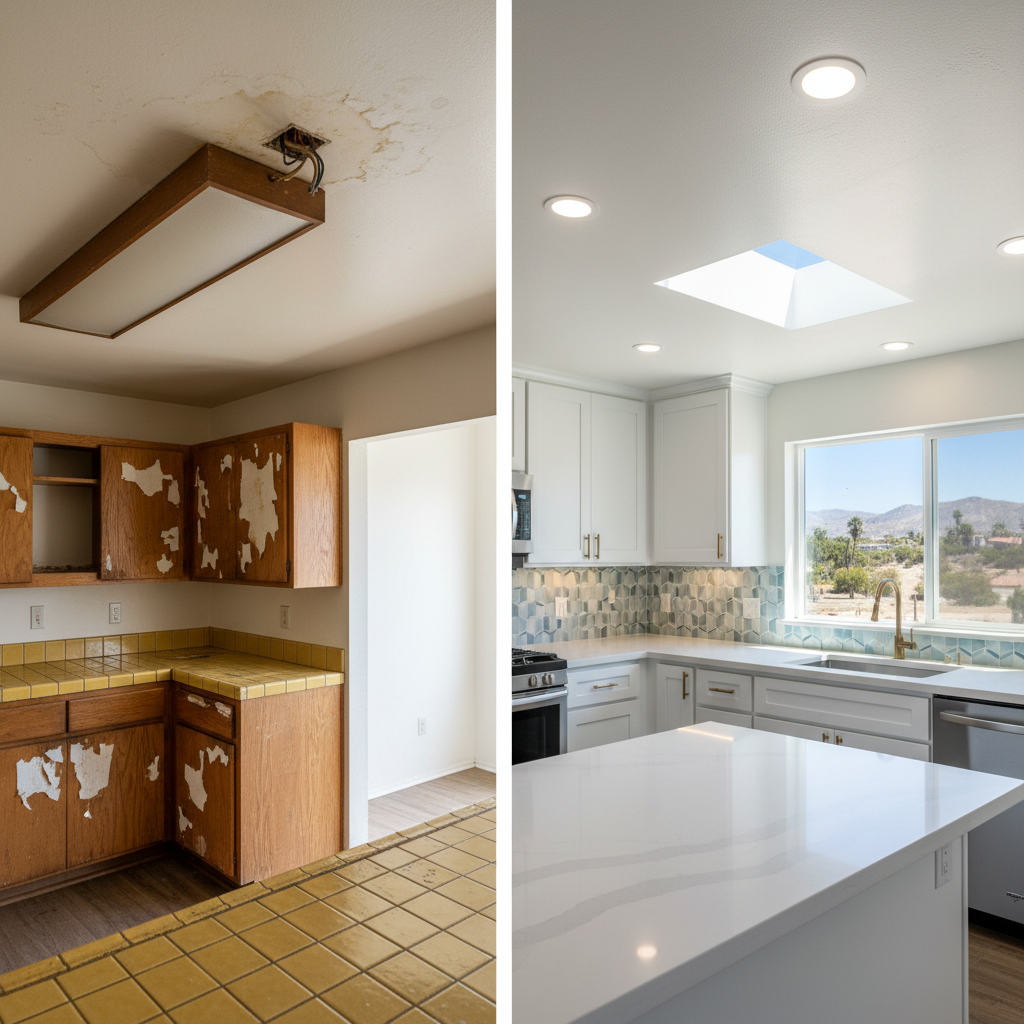
Thinking about upgrading your kitchen lighting? Most folks find themselves weighing two main options: either going all-in with recessed lights across the ceiling or really focusing on task lighting with under-cabinet strips. Both have their place, sure, but they're not interchangeable. What works best really depends on your kitchen and how you actually use it.
Recessed Lighting: That Clean, Modern Vibe
Recessed lighting, sometimes called can lights, is super popular, and for good reason. They're built right into your ceiling, so you don't really see them. This gives your kitchen a really clean, uncluttered look. If your living space is open-concept, these lights just blend right in; they don't break up your view at all.
Cost & Installation
Installation can be a bit more involved with recessed lights. You're cutting holes in your ceiling, running new wiring, and often dealing with insulation. If you've got an older home in, say, the Bonita Long Canyon area — where ceilings might not be perfectly flat or you're dealing with lath and plaster — it can take a little more work. The fixtures themselves usually aren't crazy expensive, but the labor adds up. You'll probably need an electrician for this unless you're very handy and comfortable with electrical work, which, let's be honest, most of us aren't.
Durability & Maintenance
Once they're in, recessed lights are pretty tough. Most modern ones use LED bulbs, which last for years and years. So, you won't be up on a ladder changing bulbs very often. Maintenance is minimal; just keep those trim rings clean.
Appearance & Function
Aesthetically, they're fantastic for general ambient lighting. They cast a nice, even glow across the whole room. But here's the thing: they're not always the best for direct task lighting. When you're standing at your counter chopping veggies, your body can create a shadow under a recessed light, even if it's directly above you. That's a common complaint I hear from homeowners after I've done a kitchen remodel for them.
Under-Cabinet Lighting: Brilliant for Tasks
Under-cabinet lighting, on the other hand, is all about getting light right where you need it: on your countertops. These are typically LED strips or puck lights installed on the underside of your upper cabinets.
Cost & Installation
Generally, under-cabinet lighting is less expensive to install than a full recessed lighting setup. You're often just tapping into existing electrical circuits, or sometimes even using plug-in options for simpler DIY. For a professional install, it's usually quicker and less disruptive. The cost of the fixtures themselves can vary widely, but you can find good quality LED strips that are very affordable.
Durability & Maintenance
Like recessed lights, most under-cabinet options today are LED, meaning they last a long time. They're usually well-protected under the cabinets, so they're quite durable. Cleaning is easy; just wipe them down when you clean your counters, simple as that.
Appearance & Function
The biggest win for under-cabinet lighting is its function. It eliminates those pesky shadows you get from overhead lights, making food prep, reading recipes, or just seeing what you're doing at the counter much easier. Aesthetically, they can also highlight your backsplash, which looks really sharp. The downside? They don't provide much general room illumination. They're task-specific, pure and simple.
My Recommendation for Chula Vista Kitchens
Alright, so which one should you go with? In my experience, for most Chula Vista homes — especially with our bright, sunny days and the desire for functional, well-lit spaces — the best approach isn't one or the other. It's usually both.
Here's why:
- Recessed lights for ambient light: They give you that clean, modern look and light up the whole room evenly. Great for when you're not actively cooking but want a well-lit space.
- Under-cabinet lights for task lighting: These are crucial for making your workspace functional. You won't be squinting while you're dicing onions, and your counters will look fantastic.
Think about it: you want to be able to see clearly when you're working, but you also want a nice, inviting glow for entertaining or just hanging out. Combining these two types of lighting gives you the flexibility to achieve both. You can dim the recessed lights for ambiance and crank up the under-cabinet lights when you're cooking a big meal.
If you absolutely had to pick just one due to budget or complexity, and your kitchen is mainly a workspace, I'd lean towards prioritizing good under-cabinet lighting. But for a truly well-designed and functional kitchen, you'll want both working together. We do a lot of these installations at Heritage Kitchen Solutions, and homeowners are always thrilled with the results when we combine these lighting types. It just makes the kitchen feel complete and much more usable.